A new hydrogen-powered FIA World Land Speed Record of 406.320 mph has put hydrogen propulsion firmly in the spotlight.
Set on the Bonneville Salt Flats, the achievement demonstrates just how far hydrogen technology has progressed. It is another reminder that alternative powertrains are no longer limited by performance expectations. They are increasingly being developed to compete at the highest levels of motorsport.
While land speed records grab headlines, the next challenge for hydrogen is arguably more demanding: endurance racing.
Speed records prove peak performance. Endurance racing proves that a technology can perform consistently, safely and efficiently over thousands of kilometres in competitive conditions.
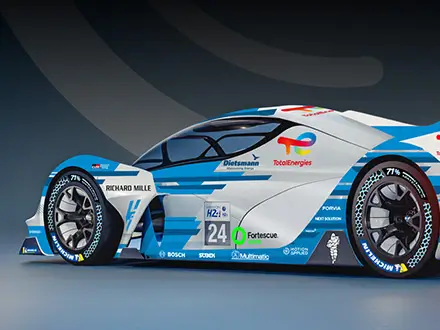
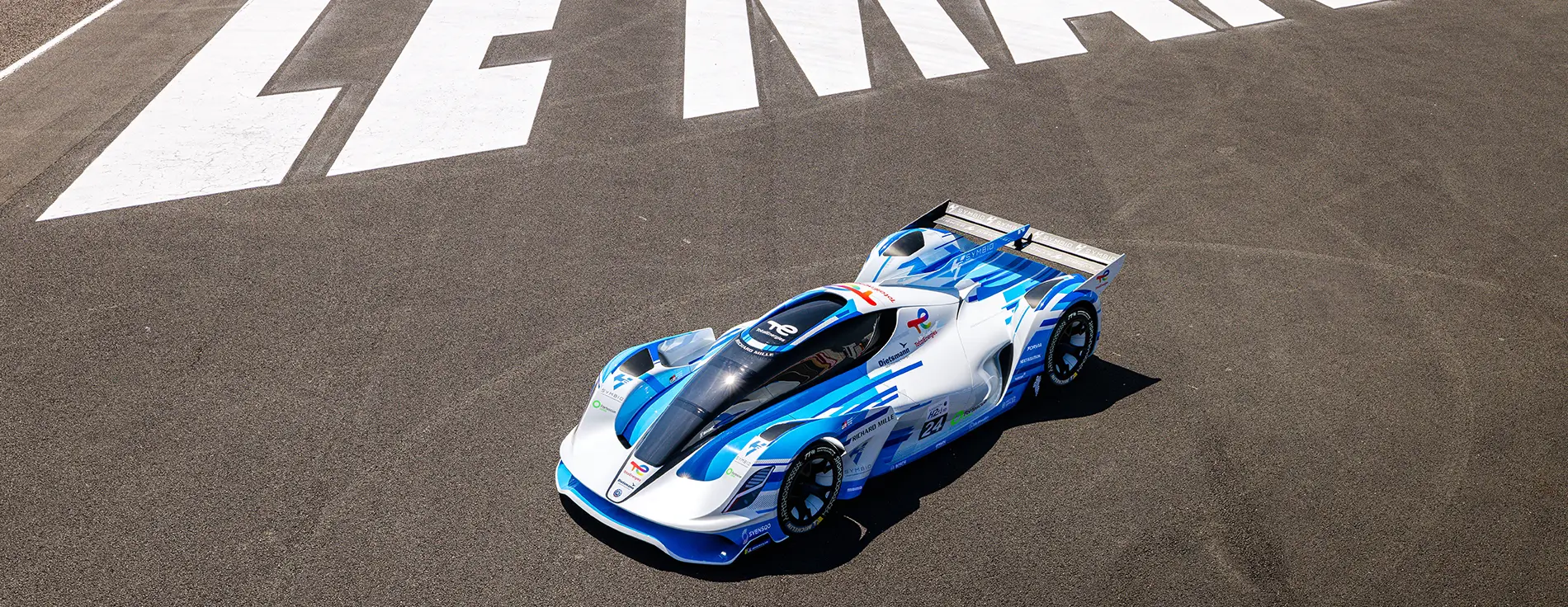
That is the challenge being tackled by MissionH24 and its H24Evo hydrogen-electric prototype, developed as part of the wider effort to bring hydrogen-powered competition to Le Mans. The programme is supported by Toyota Gazoo Racing Europe (TGR-E), combining expertise from across the motorsport and hydrogen technology sectors.
At the heart of the H24Evo is Motion Applied's TAG-510, a high-performance motorsport ECU that provides the control capability needed to manage complex vehicle systems in demanding racing environments. Designed for applications where reliability, precision and rapid processing are critical, the TAG-510 helps deliver the control and integration required for next-generation hydrogen-powered race cars.
Hydrogen race programmes present a unique set of engineering challenges. Control systems must bring together multiple vehicle functions, process information in real time and deliver repeatable performance under demanding operating conditions. These are exactly the environments the VCU-500 was designed for.
The technologies behind a land speed car and an endurance prototype may be very different, but both contribute to the same objective: demonstrating that hydrogen can be a credible, high-performance motorsport solution.
The recent record at Bonneville is an important milestone. Programmes such as MissionH24 are focused on the next step, proving hydrogen's capability over race distances and under sustained competition conditions.
For Motion Applied, that means continuing to provide the control technology that enables advanced powertrains to operate safely, efficiently and reliably on track. As programmes such as MissionH24 move hydrogen racing closer to mainstream competition, solutions like the TAG-510 will play an important role in delivering the performance and control these vehicles demand.