Why Motorsport control systems are becoming software-defined platforms
For decades, the Electronic Control Unit (ECU) has sat at the heart of the modern race car. Responsible for engine control, chassis systems and data logging, it has become one of the most critical components in motorsport electronics. Yet as vehicle complexity increases, the role of the ECU is evolving beyond traditional control functions.
Today's leading race series are generating more data than ever before, running increasingly sophisticated software applications and demanding faster engineering decisions. As a result, the next generation of motorsport control systems is shifting from dedicated hardware platforms to software-defined architectures capable of supporting a much wider range of functions.
More than a controller
Historically, motorsport ECUs were designed to perform the primary set of tasks like engine management, chassis control and data acquisition often distributed across multiple domain devices.
Modern race programmes, however, place much greater demands on consolidated vehicle electronics. Constructors now expect higher levels of inputs, more buses more communication media, increased computational performance, and the ability to support more than a dozen secure applications running at the same time. These requirements are driving a fundamental change in how control systems are evolving.
One architecture, many challenges
Different motorsport disciplines place different demands on vehicle control systems.
In Formula 1, there is an increasing need for secure, partitioned real time containers capable of hosting multiple independently protected applications on the same device. This allows stake holders to isolate software-hardware functions, protect intellectual property and manage access to critical systems without impacting functional safety or real-time performance.
Meanwhile, endurance racing programmes are beginning to explore how greater onboard processing capability can be used to improve resilience reliability. Applications such as fault detection, fault prediction and fault-tolerant control systems are becoming increasingly important as teams seek to identify potential issues before they impact performance or reliability.
The result is a growing requirement for flexible architectures that can adapt to different use cases while maintaining the determinism and robustness expected in motorsport.
The move towards software-defined vehicles
Across the wider automotive industry, the concept of the Software Defined Vehicle (SDV) is reshaping how electronics systems are developed.
Rather than designing hardware around individual functions, manufacturers are increasingly creating centralised computing platforms capable of supporting multiple software applications throughout a vehicle's lifecycle.
Motorsport is leading this direction.
Higher performance processors, increased communications networks, increased I/O capability and faster data processing are enabling a new generation of control platforms that separate hardware capability from software functionality. This allows engineers to implement new applications, deploy advanced algorithms and evolve vehicle functionality without fundamentally redesigning vehicle electronics architectures.
From data acquisition to decision making
Control systems no longer operate in isolation.
The modern SDV ECU forms part of a wider engineering ecosystem that includes data acquisition, telemetry, analysis and simulation environments. Information can be captured from thousands of sensors, distributed across data platforms and integrated with a broad range of development tools and workflows.
As these environments become increasingly connected, the ability to process, analyse and act upon data quickly becomes just as important as collecting it.
The future of motorsport electronics is therefore not simply about producing faster hardware. It is about creating system solution platforms that enable future on car electronic control systems and architectures, support more sophisticated on car software and allow engineering teams to unlock performance from the data generated by the platform.
Built for teams ready to move faster
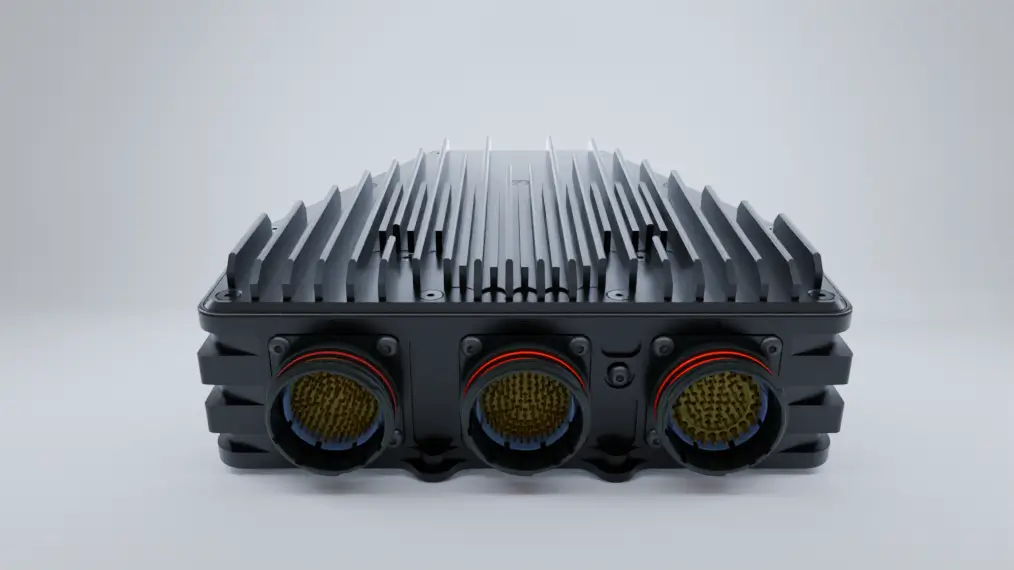
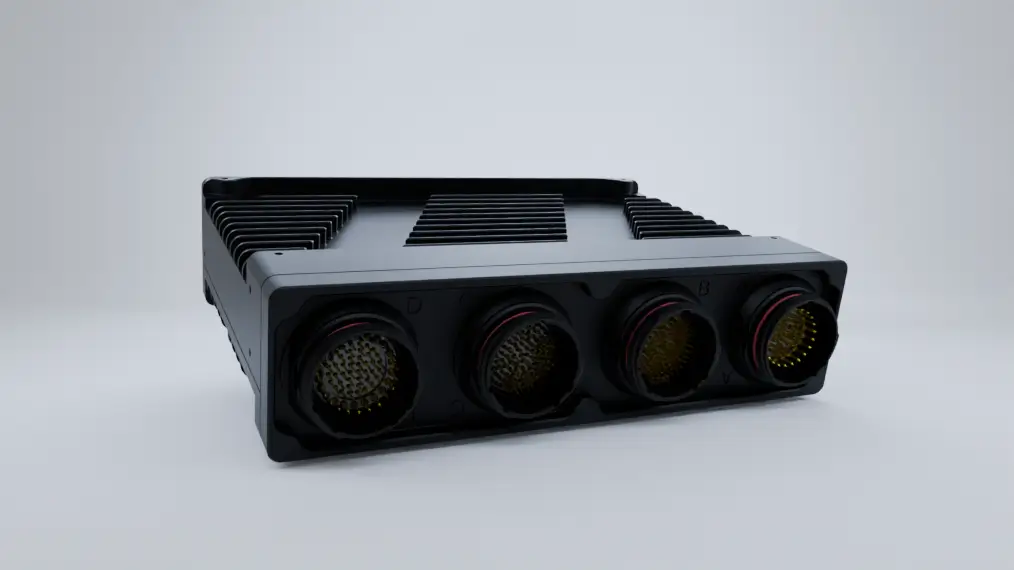
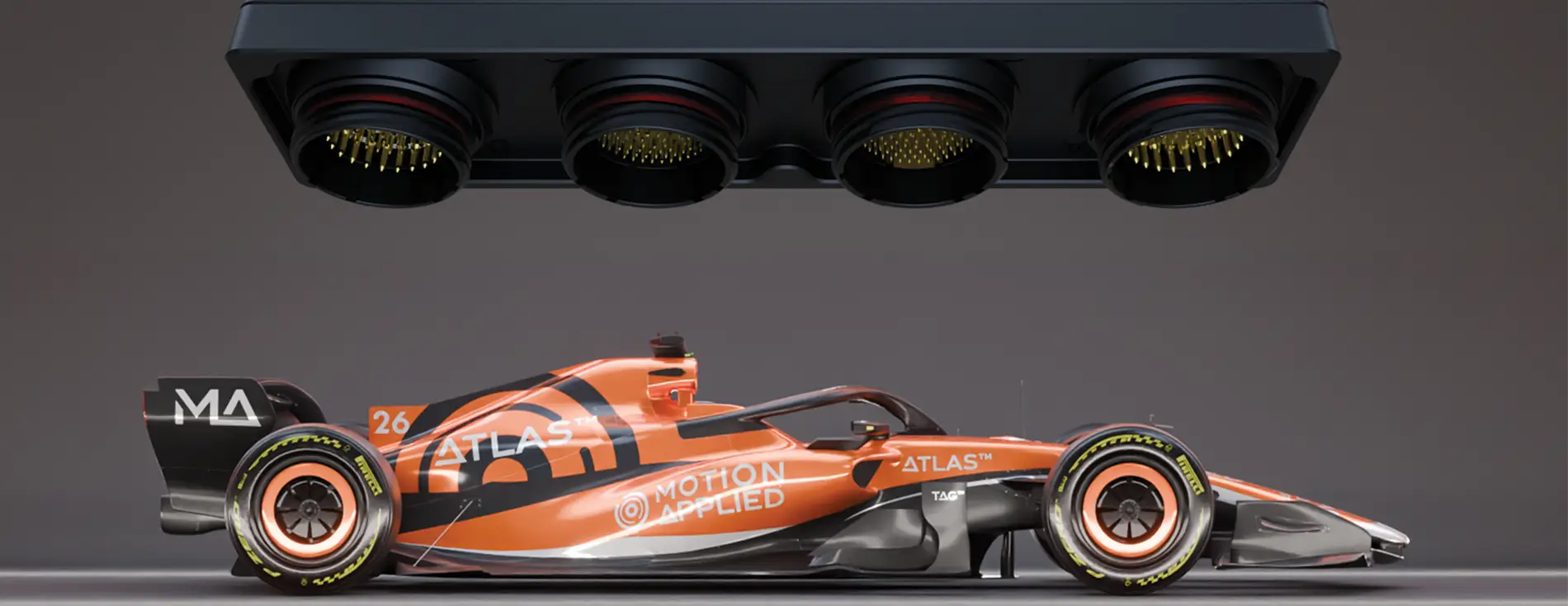
For race teams and manufacturers looking to build around this paradigm shift, Motion Applied provides the most advanced control and data platform needed to turn software-defined architectures into trackside performance. Our TAG ECU range delivers the high-performance compute, I/O, logging and integration capability exceeding today’s most complex motorsport applications, giving constructors a proven foundation for advanced control, rapid development and reliable operation in demanding race environments.
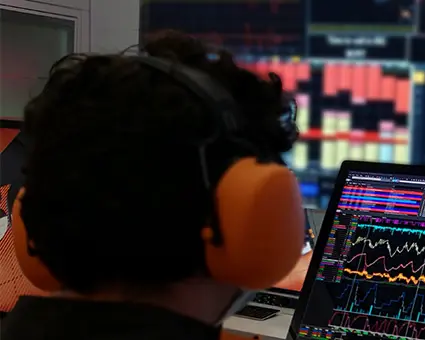
Alongside TAG ECUs, the ATLAS software amplifies engineering effort with industry leading development toolchains, analytics and in race car running. From live telemetry, post-session analysis to deeper system insight, ATLAS helps teams understand performance faster, shorten development cycles and extract more value from every performance metric.
Together, TAG and ATLAS are designed to support the next generation of motorsport electronics: connected, software-led and engineered for competitive advantage. For teams preparing for future vehicle architectures, they provide a practical route to greater integration, faster insight and more scalable control system development.
Looking ahead
The next generation of motorsport control systems will be defined by compute capability, connectivity and software flexibility.
The ECU is the central computing platform, defined by the sophisticated software, machine learning and advanced analytics around it ready to take on the challenge of current and future race programmes.